
I IV V
Blues
Three chords and the truth. The minor pentatonic over a dominant 7th.
shuffle
A practice engine that maps every chord, scale, and progression to the fretboard — so you stop guessing and start playing.


Three steps. No theory degree required.
Type any chord or progression and chord shows you every place it lives on the fretboard.
A diagram, not a chart. Fret numbers, finger positions, and the notes you're actually playing.
Play it, loop it, slow it down. Your ear learns the shape while your fingers learn the pattern.
Learn more, guess less.
Majors, minors, 7ths, sus, diminished — each one mapped to real finger positions.
Major, minor, pentatonic, and modes, drawn across all six strings.
ii–V–I, the blues, borrowed chords — hear why they work, not just that they do.
Intervals, chord quality, and rhythm, graded as you go.
Slow any shape down and loop it until your hands know it cold.
Track what you've drilled, and what's still wobbly.
Shot where the music actually happens.
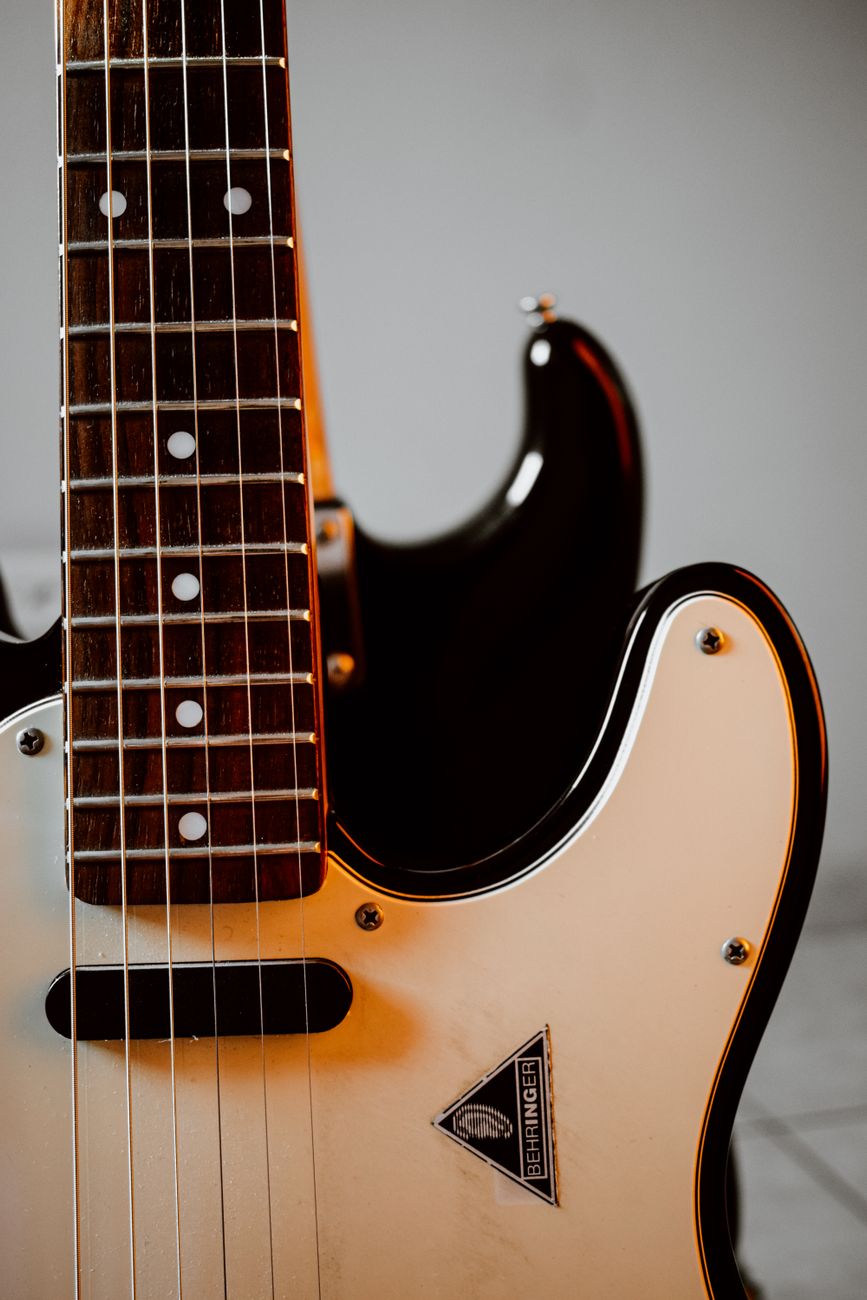





A chord is a shape. chord draws it for you.
Every chord is a pattern of dots on six strings. chord renders the shape, names the notes, and plays it back — so the neck stops being a mystery grid and starts being a map.
One bar, one hand, at half speed.
The style decides the vocabulary.
Three chords and the truth. The minor pentatonic over a dominant 7th.

Sevenths and tensions, moving in steps toward home.

Campfire chords and fingerpicked arpeggios, the strings left to ring.

Roots and fifths through a loud amp. The shape is the song.

I taught myself guitar in a rented flat in Lisbon, on a borrowed acoustic with one string that wouldn't stay in tune. I learned chords from a printed chart I taped to the wall, and I learned them wrong — upside down, because I'd hung it backwards.
What I learned: a chord chart tells you where to put your fingers. It doesn't tell you why, or where else that chord lives, or what it sounds like next to the one you just learned. That gap is where every guitarist stalls.
So here's the invitation: pick a chord you already know. Find it five places up the neck. That's the whole product.
Live, from our backend.
People who finally got it.
"I've had the same four chords for a decade. chord showed me fifty places to play them, and my fingers finally stopped guessing."
"The ii–V–I page changed everything. I could hear why the chords wanted to move, not just that they did."
"I set it to slow down the barre chords and loop them. Two weeks later my hands just knew it."
Where we're going.
Fretboard engine + 2,100 chords, live in beta.
Ear-training drills and a public progression library.
MIDI & audio playback for every shape, at any tempo.
chord hardware: a practice metronome that listens back.
know the neck.